The Resguardo Indígena Cañamomo Lomaprieta
is one of six legally constituted indigenous resguardos (reserves) in the Caldas department of Colombia. The Resguardo is constituted of 32 Emberá-Chamí communities distributed between the municipalities of Riosucio and Supía. The territory is home to a growing population of approximately 25,000 people in an area of about 38 km2, rendering the location increasingly crowded. The Resguardo is a partner of CICADA through the
Forest Peoples Programme (FPP), who have closely collaborated with the leaders of the Resguardo against intrusive large-scale mining projects in the area.
Territorial Pressures and Historical Fragmentation
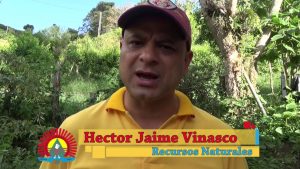
Hector Jaime Vinasco, ex-governor of the Resguardo. Source: youtube.com/watch?v=I7kul879v3U
Hector Jaime Vinasco, ex-governor of Cañamomo Lomaprieta, states at CICADA’s
2016 Meeting:
“[The Resguardo] has been quite a reduced, fractioned, and pressured territory throughout the different historical events […] by land businessmen, by land mercenaries, who have one way or another used their relations with notaries, civil registrars, statesmen, to increasingly break apart the Resguardo, and today we are confronted with a painful reality of discussion with the state about colonial titles and the titles of our Resguardo.”
Large-Scale Mining vs. Ancestral Practices
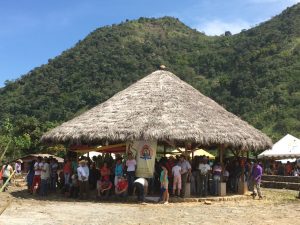
Members of the Resguardo Indígena Cañamomo Lomaprieta. Source: landrightsnow.org
The Colombian government has approved and promoted a number of large-scale gold and other mining projects in the area to the detriment of ancestral small-scale mining practices, which were considered illegal. The entire territory of Cañamomo Lomaprieta is virtually covered in mining titles issued by the government, mostly to Canadian mining multinationals.
As Hector Jaime Vinasco stresses, although Colombia represents a hopeful example for indigenous protection on paper through official rights recognition, as well as progressive decisions by the Constitutional Court, the reality is much starker.
“Since [the government] knows it won’t comply, it has no problem signing anything.”
Vinasco points to the 1,202 agreements the government has failed to respect towards the country’s indigenous communities. As a result of this struggle, Vinasco has tirelessly fought for the protection of his lands against unlawful resource extraction and the fulfillment of the Resguardo’s
Plan de Vida (Life Project). For his battles, and that of many other engaged inhabitants of the Resguardo, threats of violence are common occurrence.
Joining Forces: Inter-ethnic Collaboration
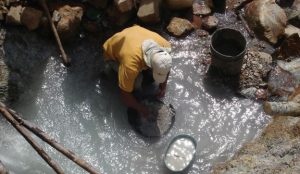
“Gold panner in the mining area called Gavia.” Source: Joining forces, weaving strategies
Viviane Weitzner,
policy advisor at the Forest Peoples Programme, has been involved with the Resguardo Indígena Cañamomo Lomaprieta in big part through the inter-ethnic project
Joining forces, weaving strategies,
supported by the Norwegian embassy and the Kingdom of the Netherlands. This project brings together the members of the Resguardo with Afro-Colombian members of Palenke Alto Cauca, represented nationally by the Proceso de Comunidades Negras.
PROJECT OBJECTIVE: “The primary objective of the project was to strengthen self-governance, territorial defense and autonomy by focusing on appropriating and implementing the right to free, prior and informed consultation and consent in all decision-making affecting ancestral territories in the Palenke and the Resguardo, specifically with regards to mining.”
—Joining forces, weaving strategies
Legal Recognition and Achievements
Thanks to international support and strengthened organization, the Resguardo has been collectively working at an institutional level to legitimize and appropriate their artisanal mining practices, standardizing them to be safer, declaring the territory of the Resguardo a no-go zone for medium and large-scale mining, and establishing the Resguardo’s official protocol on public consultation and free, prior and informed consent (FPIC).
⚖️ CONSTITUTIONAL COURT RECOGNITION (2017):
The Colombian Constitutional Court has recognized the rights of the Emberá-Chamí of the Resguardo, as well as their right to ancestral mining activities, ordering the suspension of a number of large-scale mining projects.